Reflections on our Summerhill movie screening
- Imre Wessels

- Aug 9
- 3 min read
Updated: 5 hours ago
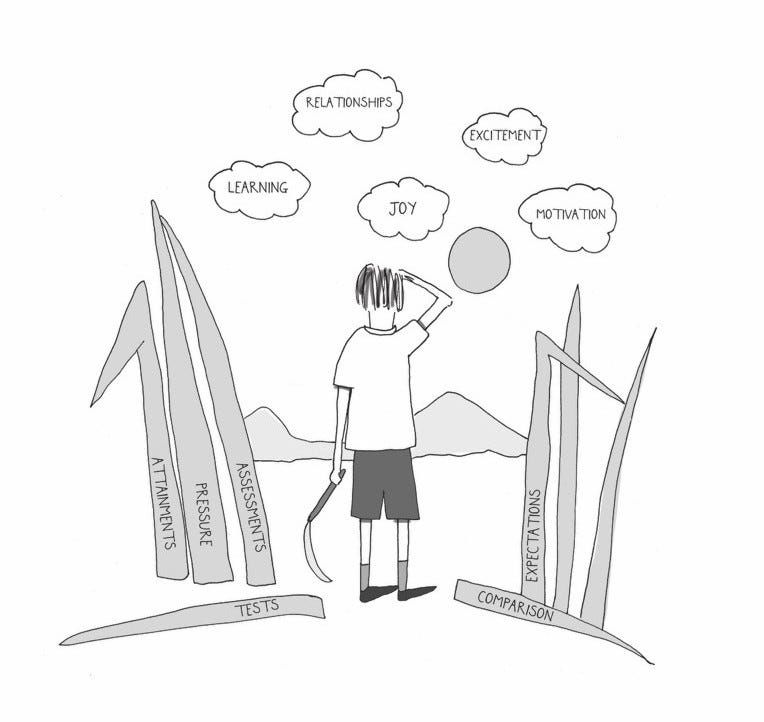
We were all seated for the documentary 'How Summerhill Works'. The documentary began with Zoë Neill Readhead, the daughter of Summerhill school founder A.S. Neil, explaining that the school offers not only 'freedom to' but also 'freedom from'. This distinction is important because children have the freedom to pursue their interests at Summerhill. But they also have the freedom from expectations, as classes are entirely optional.
Summerhill has operated since 1921 as a democratic boarding school. Students from all over the world come to Summerhill to, in the words of one parent, ''Have a happy childhood''. Children are trusted to learn from life through play and everyday interactions with other students. One parent remarked that, ''Through play, they find their way to education''.
''Through play, they find their way to education''.
The school offers lessons, but attendance is optional. The teaching staff enjoys this setup because students who attend lessons are more motivated to learn. A teacher observed, ''The students are brimming with ideas and questions''.
Another aspect of the school is its democratic nature. There are three school meetings every week (Monday, Wednesday, and Friday), each lasting an average of one hour. During these meetings, motions are proposed to turn into school laws. What takes up more time is the school resolution procedures. If a child has a conflict with someone, they can 'bring them up' at the school meeting. That way, everyone is held accountable through feedback, warnings, and occasional consequences such as fines. The entire community will say if someone did anything wrong. Accountability to a wider group is why bullying is so rare in democratic schools.
Zoë mentioned that one school meeting has more learning in it than an entire week of lessons. This is because students are very engaged during these school meetings. Everyone is interested in having a pleasant atmosphere at school. One observation is that, ''Children like to listen to one another'', as feedback from peers resonates more than whatever adults are trying to say.
Democratic schools are very structured. Summerhill has over 400 laws that were created and passed by the students themselves. For example, you need a Nerf license to be able to play with a Nerf gun. If someone uses their Nerf gun irresponsibly, the school community revokes their license.
The parents interviewed mentioned that they liked Summerhill because it, ''Offers children the freedom to find out who they are'' and ''To grow and to become oneself''. The most memorable quote was from a parent who stated, ''My children became happy children again''.
''My children became happy children again''
Zoë cautions viewers of the documentary that Summerhill is not a utopia: ''Children will experience the full range of emotions''. That makes the learning experience real. Because it is real life in a small-scale democratic community. Graduates of Summerhill often discover their lifelong passions in the school. But even those who don't have strong values, clear boundaries, and know how to cooperate with others.
After the documentary, there were a few questions about the differences between Summerhill and Singapore Democratic School (SDS). One difference is that SDS is not planning to open as a boarding school. SDS will be open during regular schooling hours.
Another difference is that Summerhill offers timetabled lessons to comply with Ofsted inspections and to prepare students for their GCSE exams. Lessons are not proactively offered at SDS because we model ourselves after the Sudbury Valley School in the US. The reason is that timetabled lessons can subtly shape expectations and create 'schoolish' habits that compete with self‑directed activity. In essence, the more lessons and activities we plan, the less active the students become.
We will be organising more meetups and movie screenings, so stay tuned!


Comments